
“A journey is best measured in friends, not in miles.” — Tim Cahill
The journey began with all of us piling into the bus and erupting into a loud, enthusiastic “Ganpati Bappa Morya!” as if the entire city needed to be notified that we were going on a school trip. The excitement felt almost electric—raw, buzzing, impossible to sit still through. By the time we reached LTT Kurla Station, that energy had turned into pure chaos. I had brought the largest suitcase in the group, because of course I did, and dragging it across the station felt like an accidental gym workout I had not trained for.
We boarded the Garib Rath and within minutes, the great berth negotiation war began. “Please yaar switch with me,” “I can’t climb upper,” – the drama was unmatched. Eventually, though, things settled, bags found corners, people found comfort, and the train slowly became less of a journey and more of a moving house party. We took silly selfies, recorded chaotic videos, and laughed in that overly-loud way groups of friends always do in trains.
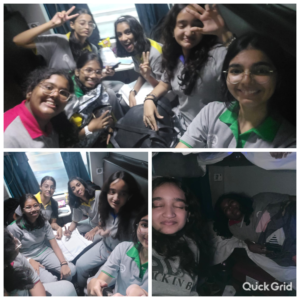
That night, after the lights dimmed and the teachers assumed we were asleep, we executed our highly classified Sandwich Smuggling Operation. I passed sandwiches from my lower berth to the top berths like we were running a secret underground food trade. It was unnecessary, mildly ridiculous, and absolutely perfect.
The next day went by in the dreamy, timeless rhythm only long train journeys have—card games, last-minute pictures near the window, someone always losing their bottle, their charger, their sanity. And then, after about thirty hours of swaying tracks, we finally reached Thiruvananthapuram. The exhaustion was real, but the excitement outweighed it.
Our hotel, KKM International, felt like heaven in that moment—soft beds, cool air, clean rooms. Dinner was a blurry half-dream, and just as we were settling into bed, we learned we had to be up at 4 am for the Padmanabhaswamy Temple visit. The silence that fell in that room was the sound of collective heartbreak. But four of us shared a room, which naturally meant that sleep did not exist. We stayed up laughing at nothing, watching random movies and prank calling other rooms like we were starring in our own comedy special.
Still, in a feat of pure willpower and chaos, we did wake up. The day’s colour code was red, and I was officially appointed Mundu Draper-in-Chief because apparently I was the only one who knew how to tie one properly. Imagine a room of half-awake teenagers at 4 AM: lipstick going on crooked, hair clips flying, someone yelling “HOLD STILL YOUR MUNDU IS FALLING,” and everyone insisting they were “ready” when they very much were not.
But the moment we stepped into the Padmanabhaswamy Temple, all of that noise fell away. The corridors, the ancient stone carvings, the low chants in the morning air—everything was calm, sacred, and impossibly still. Watching locals walk in their beautifully draped sarees and crisp white mundus felt like stepping into a world that moved slower and breathed deeper.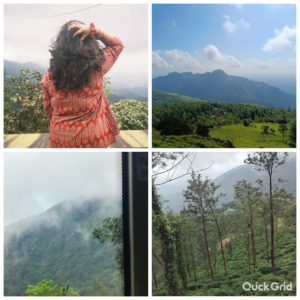
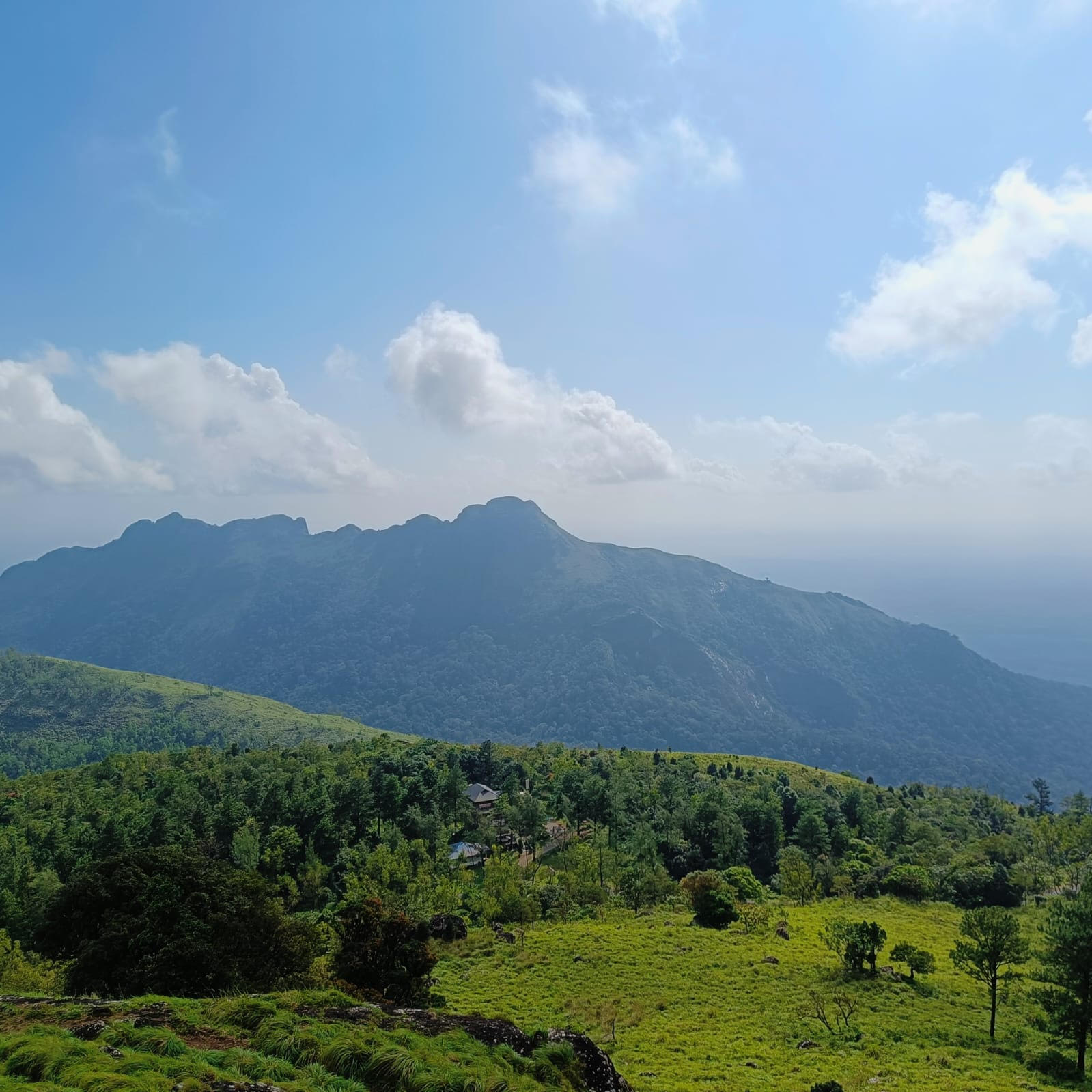
From there, we headed to Ponmudi Hills, and the journey to the hills was almost more beautiful than the destination itself. Roads lined with endless stretches of rubber plantations, coconut and palm trees swaying like they were choreographed, tiny Kerala houses with tiled roofs and sleepy verandas—it looked like pages of a storybook flipping past the windows. The hills were layered like watercolour—one fading into the next, disappearing into soft white mist.
By the time we got back to the hotel, exhaustion had wrapped itself around us like a blanket. We assumed we were going to sleep.
But then—DJ Night.
There is no faster recovery known to science than a teenager hearing “There’s a DJ downstairs.” Suddenly, everyone was alive. Hair straighteners were heating, perfume filled the hallways, bangles clinked, and mascara wands moved with surgical focus. . And then we danced—loud, offbeat, breathless, no-holding-back dancing. We screamed lyrics, formed circles, broke the circles and attempted steps we definitely could not do.
The next day was the Green Day, and probably the most adventurous one. At the Zoological Park in Thrissur, we saw animals that actually made us stop and stare instead of just glance and move on—tigers lounging like royalty, lions pretending not to notice us, hippos half-asleep in pools of water, ostriches that looked confused at our existence, vultures, emus, storks, leopards, hyenas—each enclosure felt like a story. At one point, two of my friends and I drifted away from the crowd. There was no shouting, no rush, just us quietly watching animals move in their own unhurried way.
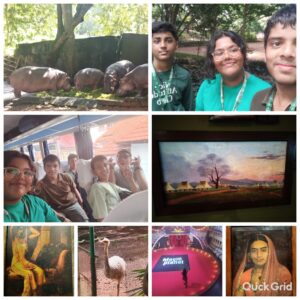 Later, at the Raja Ravi Varma Art Gallery, time slowed. His paintings—Shakuntala, Hamsa Damayanti, The Milkmaid—felt like paused emotions. They held stories in the tilt of a head, the gaze of an eye. We stayed there longer than we expected, moving slowly, absorbing the softness in every brushstroke.
And then came Magic Planet—a complete shift in energy. We watched Daniel D’Souza perform magic with such ease that we laughed through half of it. Mohammed Shanu’s illusion show, though, was something else entirely—the kind that makes you forget reality has rules. Then came the performance by differently-abled children—full of rhythm, joy, courage, pride. We didn’t watch quietly—we clapped, we cheered, we danced with them. And the street magic performance by Ali Cherappullasery felt alive in the best way.
By evening, we were back in the bus, heading toward Kanyakumari. The ride was long—the kind of long that gives you space to just exist. We talked—real talk. The kind that goes deeper than the surface level. The kind that only happens at night, on roads leading to somewhere new.
The next morning in Kanyakumari began before the sun itself. We walked to the shore while the sky was still the colour of sleep, wrapped in our pyjamas and hoodies, some of us half-awake and some pretending to be. But then the horizon began to glow — a soft orange seam across the dark sea — and suddenly we were all awake.
The sunrise in Kanyakumari is famous for a reason. It didn’t just rise — it unfolded. The sky turned gold, then pink, then a shade of blue that didn’t feel real. We stood there laughing at each other’s sleepy faces, taking pictures with messy hair and unplanned joy.
After that, we got ready and took the ferry to the Thiruvalluvar Statue and the Vivekananda Rock Memorial, with waves crashing around us. The wind at the memorial felt like it carried stories—of meditations, monks, philosophy, and quiet strength. We sat on warm stone steps, took pictures with the sea stretching out behind us, and didn’t rush anything. The bookstore there was small and perfect—sun-bleached shelves, old postcards, and books that smelled like the sea.
When we took the ferry back, we were hungry in that very real, post-sea-breeze way. We ate lunch at a restaurant nearby and then… we rested. Everyone gathered in one place, sprawled across chairs and floors, watching the India vs Australia match, arguing about catches and overs like they personally owned the team. After that, we went to the rooftop and just lay there for a while, doing absolutely nothing. At some point, empty plastic bottles turned into footballs and strategies we didn’t need were shouted across the terrace.
In the evening, we visited Bhagavathy Amman Kovil. The temple glowed with warm lamps and quiet devotion, and the colours felt deeper in the soft light. From there, we walked to the Triveni Sangam, where three seas meet — the Arabian Sea, the Indian Ocean, and the Bay of Bengal. And then came the sunset — as breathtaking as the sunrise but quieter, like a conversation instead of a celebration.
Later that evening, under a sky that had turned almost navy blue, we left Kanyakumari and began our journey back toward Thiruvananthapuram. The bus was calm this time — music softer, voices lower, everyone a little quieter in that post-beauty kind of way where your mind is still holding on to what you just saw.
The next morning was white day, and something about it felt different even before it began. We slipped into our white outfits, grabbed sunscreen, sunglasses, hats, and stepped out into sunlight that felt warm without being harsh.
We were going to Poovar Island.
When we reached Poovar, we split into groups for the boats. I ended up in a boat with my closest friends and my favourite teacher, which immediately felt like the universe had positioned the day perfectly. The boat glided across still green water lined with mangroves. Every few minutes, someone would spot something — an eagle soaring in clean circles overhead, a kingfisher flickering blue and orange, even the quiet ripple of a water snake slipping past reeds.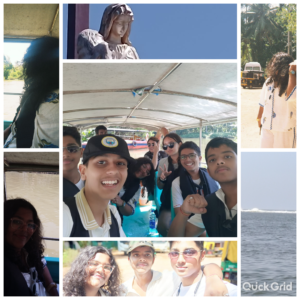
We took pictures the way people do when they don’t want to forget a single moment — laughing, sunlit, hair messy from the wind. We sang with absolutely no regard for keys, pitch, or whether we even knew the lyrics properly. We didn’t need to do anything extraordinary. Just being there, on that water, with those people, felt like enough.
After lunch, we began the six-hour journey to Kochi. A long bus ride usually means sleep — but not this one. This one turned into a fully unhinged concert-tour-party situation. We danced in the aisle even though it made absolutely no sense. We banged our heads on the bus overhead cabins more times than we will ever admit.
.The next morning felt soft and a little bittersweet. We packed our bags—fighting zippers and sitting on suitcases to get them to close—and then headed to breakfast. Pancakes, smoothies, cereal and juice—simple, bright, happy food. Then we set out to explore Kochi.
Fort Kochi had a different kind of charm—quiet lanes, pastel buildings, trees that leaned in like they were listening. We walked without hurrying, just letting the day unfold. At St. Francis Church, sunlight filtered in pale and warm, giving everything a calm, steady feeling. Down by the shore, we watched artists painting the Chinese fishing nets—their hands steady and faces patient. It was the kind of place where time felt like it was walking rather than running.
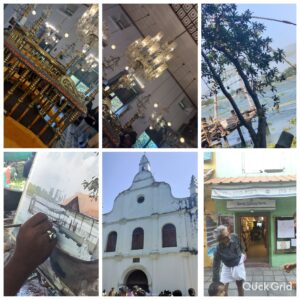 We shopped for the basics- a few fridge magnets, a bracelet or two and a few shells.
After lunch, we headed to Jew Town. The Synagogue was quiet and cool, a kind of stillness that felt respectful just to stand in. And after that, we shopped properly—the fun kind. The three of us drifted off from the group again, just like we had at the zoo before. It felt natural, easy, the way some company just fits the pace of your day.
We bought spices, coffee, banana chips, and because I was the local, the responsibility of haggling naturally fell to me. We compared prices, made dramatic faces when the shopkeepers quoted something too high, walked away on principle, came back triumphantly when they lowered the price—it was a whole performance.
They helped me pick out bags, and I helped them choose jewellery for their sisters. It felt wholesome in a way that didn’t need to be said aloud—just easy laughter, slow
By evening, our bags were heavier and our feet were tired in a happy way. We boarded the Duronto train back home that night. On the way there, the train had been loud — full of laughter, music, and constant chatter. But on the way back, the coach was wrapped in a quiet that wasn’t sad, just full.
Everyone was in their own little bubble, leaning against windows, gently scrolling through the pictures we had taken — sunsets, temples, boats, messily framed selfies, puppies, plates of food, and a whole timeline of joy.
When the train finally reached, and we returned to the school gate, our families were already there, waiting with the kind of happiness only home has. We hugged, smiled, waved, lifted suitcases that now felt even heavier, and shared a million “How was it?” in the span of three seconds.
But as we walked out, there was that little bittersweet ache: tonight, there would be no all-night conversations, no prank calls through hotel walls, no smell of sea breeze drying in our hair.
We went home with a million pictures, a suitcase of dirty laundry, and a heart so full it almost hurt — the good kind of hurt. The kind that tells you that you really lived these days. That you were really there.
And that maybe — someday — we’ll all be somewhere again, early in the morning, messy hair, half-asleep, watching another sunrise.